Explainer: Unifrog’s SEL and PSHE Package FAQs

Want to show the video above when you're not signed into Unifrog? Here's the link.
The SEL and PSHE package in a nutshell
Our whole-school SEL and PSHE Package makes it easy for you to meet the CASEL competencies and the ISCA Student Standards, as well as the UK government's objectives for PSHE that are relevant to an international audience.
The SEL and PSHE Package has two components:
- Lesson Pack
80+ off-the-shelf lessons to teach students SEL and PSHE
- Teacher CPD courses
Two professional development courses for teachers in SEL and PSHE
“Congratulations again on putting together such a great SEL Package… and delivering a great, thorough and impressive product!"
- Brooke Fezler, Associate Executive Director of the International School Counseling Association (ISCA)
What's in the lesson pack?
The lesson pack features 82 lessons, which are:
- Plug-and-play: easy to deliver with minimal prep time.
- Engaging: student-centered tasks empower students to become active learners.
- Supportive: detailed guidance allows teachers and counselors to deliver challenging topics confidently.
- Harmonized with careers and college guidance: the lesson activities help students get the most out of the Unifrog platform.
- Fully editable: allowing you to customize the lessons to suit your context.
Here Lucy gives an overview of the lesson pack:
Want to show this video to someone without logging in to Unifrog? Use this link.
Download our one-pager about the SEL and PSHE Lesson Pack here.
What are the teacher CPD courses?
To support effective use of the lessons, the Package includes two SEL / PSHE CPD courses for staff:
- Leading SEL in international schools: designed for SEL leads, responsible for SEL across a whole school or grade/year.
- Delivering SEL in international schools: designed for teachers or counselors who deliver SEL lessons.
Both the teacher CPD courses are:
- CPD accredited: access a professional development certificate with the CPD Certification Service’s stamp of approval.
- Practical: reflect on your current SEL provision and prepare to implement changes.
- Self-paced: complete in one go, or over an extended period.
- Written in partnership with ISCA: learn more from the leading body for international counseling and SEL.
- School-centred: hear best practice from experienced professionals, not just theoretical explanations.
How is the lesson pack structured?
The lessons are sequenced in a spiral curriculum across year groups / grades to build students' knowledge and skills, but can also be taught as standalone sessions, and out of the suggested sequence.
They are available in 15 min and 60 min versions, with some optional worksheets to support students with additional learning needs.
Here is a screenshot of the spiral curriculum model. Each lesson’s name is hyperlinked to the profile on the Unifrog platform for the lesson in question:
What topics does the lesson pack cover?
We’ve organized the topics in the Lesson Pack according to the five CASEL competencies. Here are the topics we cover:
| Self awareness |
|
| Self management |
|
| Social awareness |
|
| Relationship skills |
|
| Responsible decision-making |
|
To see the full list of lesson titles, click here.
How does the lesson pack fit in with the rest of Unifrog?
We’ve designed the lesson pack to maximize your school’s use of the rest of the Unifrog platform:
- Links to the platform: Each lesson is linked to two relevant Know-how library guides to deepen students' understanding of the topics covered.
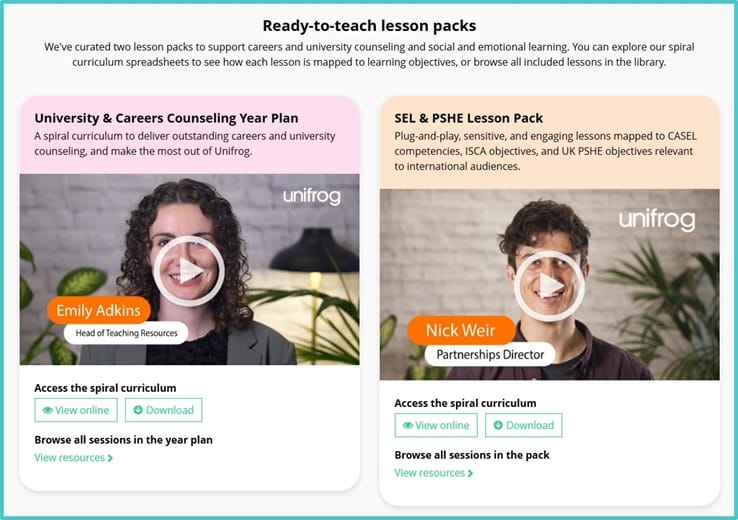
- The lesson pack is accessed within the counselor/teacher side’s Resources library. If you subscribe to the SEL and PSHE Package, it will appear on the Resources library, alongside the existing Unifrog University and Careers Counseling Year Plan that is included as standard in every Unifrog subscription:

What do you mean when you say the lessons in the pack are plug-and-play?
While all the lesson slides are fully editable, we’ve made it as easy as possible for you to simply open our PowerPoints and teach:
- Computer access not necessary: Learners can complete the activities in their exercise books or on paper.
- Optional support tasks can be printed for learners with additional learning needs: This is the only photocopying teachers or counselors would ever need to do.
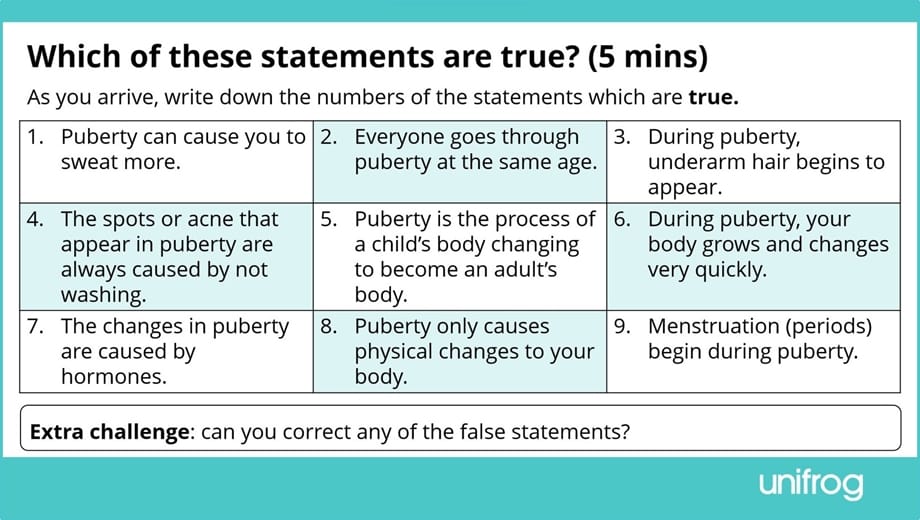
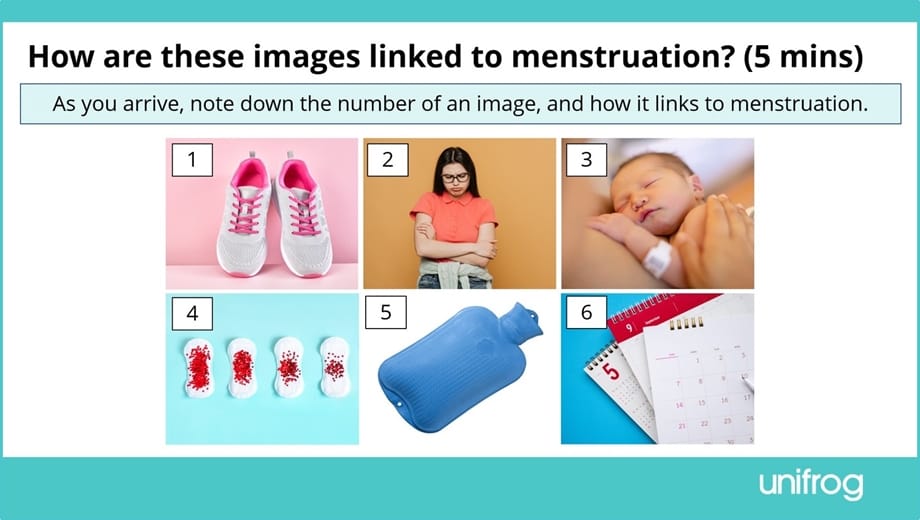
- Clearly explained activities on the slides: There’s no need to refer to accompanying notes to understand how to deliver an activity. Here’s an example activity slide:

How do the materials support teachers and counselors to deliver the lessons?
We make it easy for teachers and counselors who are not specialists in SEL or PSHE to deliver our lessons with confidence. To support teachers and counselors, in every lesson we do four main things:
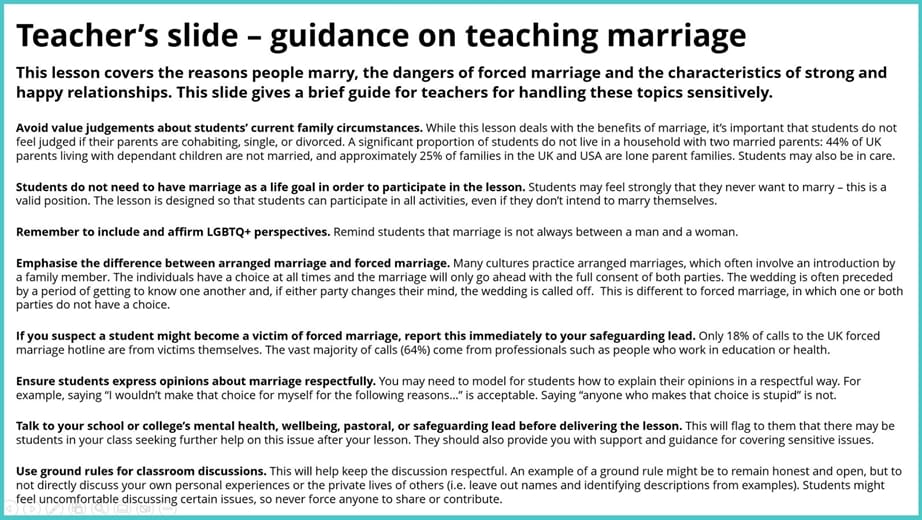
- Guidance: Each PowerPoint begins with an overview for teachers and counselors of the topic area, to help them quickly understand the key issues. Here’s an example:
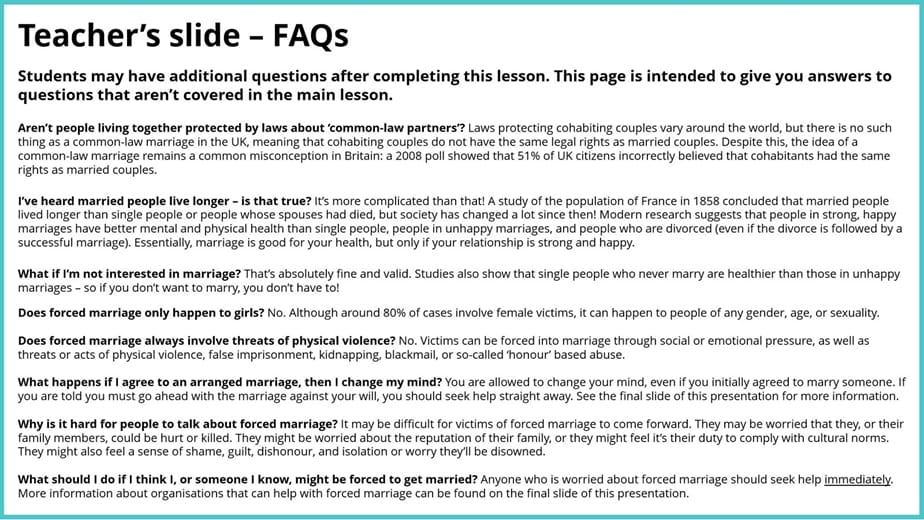
- FAQs slides: These help teachers and counselors answer potentially awkward or difficult questions posed by students. Here’s an example:
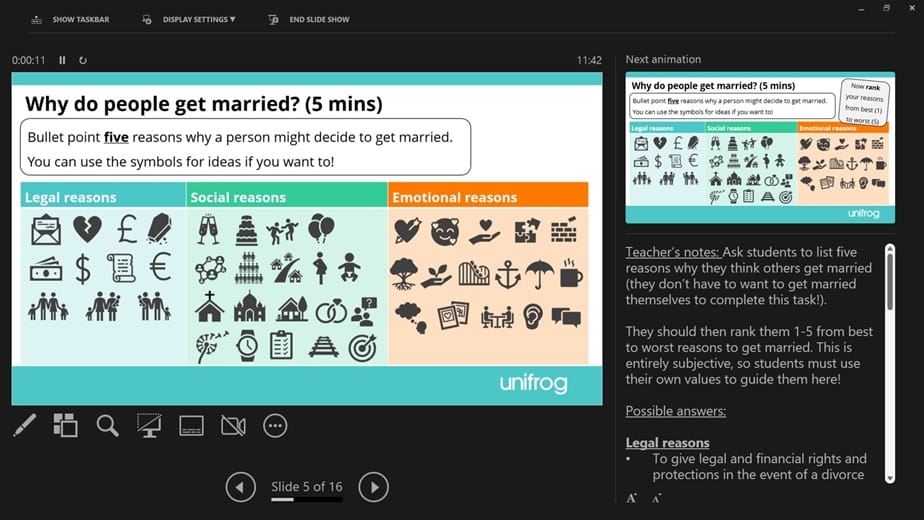
- Counselor/teacher notes: Each lesson activity slide comes with notes covering:
- Prompt questions
- Suggested answers for activities
- Supporting facts and information to help teachers and counselors answer students’ questions.
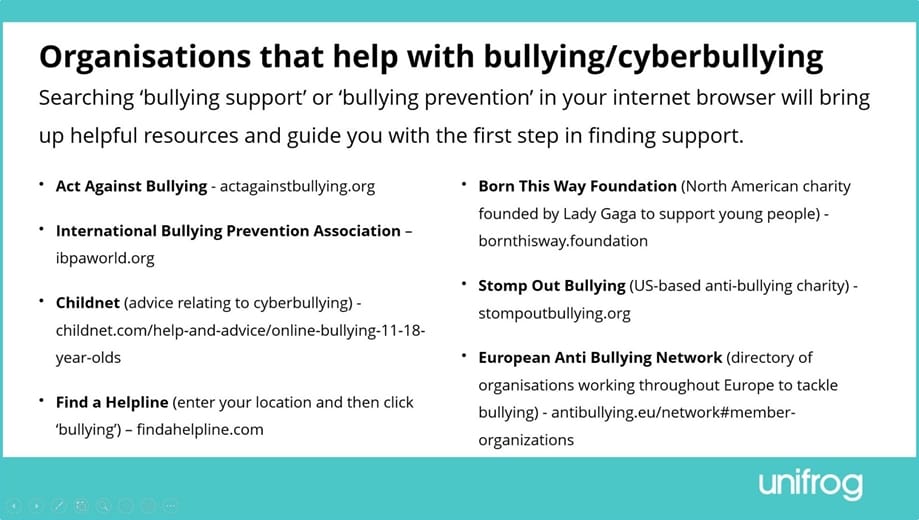
- Support organizations: Each PowerPoint ends with a list of helpful organizations students can contact for further support with any of the issues raised in the lesson.


What do you mean when you say the lessons are engaging?
We know students ‘switch off’ when lessons are too passive. We’ve made sure our lessons are engaging by:
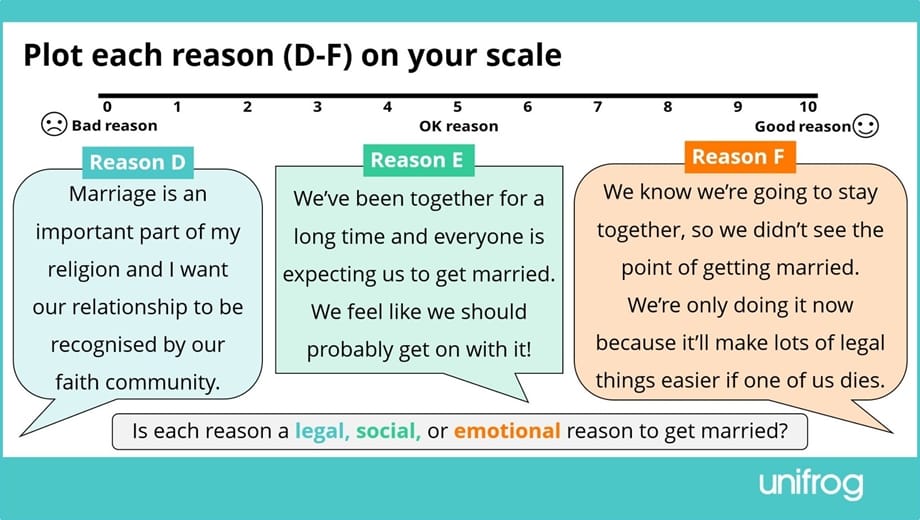
- Putting students’ thoughts and opinions at the heart of the experience. We use opinion lines, mind maps, and scaffolded discussion tasks to help students to reflect on their attitudes and beliefs.
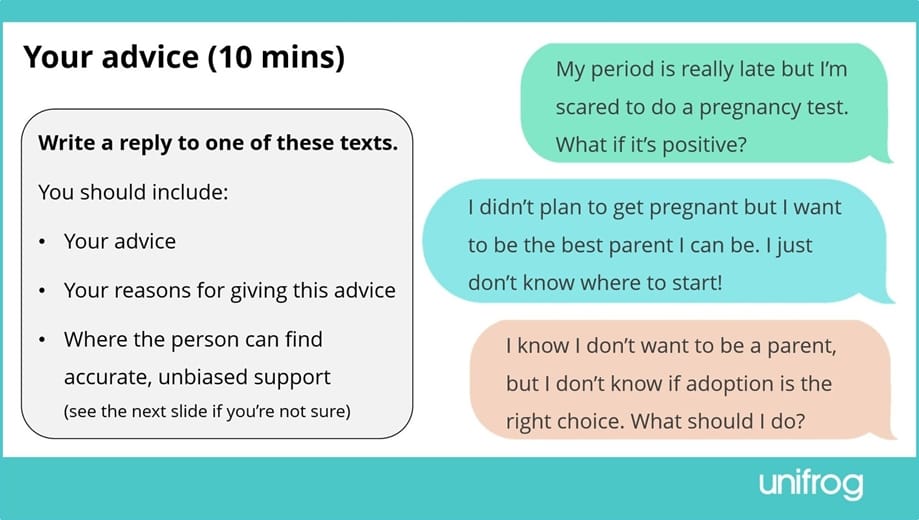
- Encouraging students to synthesize information and apply it to real world scenarios. This might involve replying to a text from a friend, completing a conversation script, or identifying the correct course of action to take in a scenario.
- Providing challenge and pace. The lessons have clearly defined objectives, and tightly timed activities.


How does the lesson pack support students with additional learning needs?
All the lessons aimed at students aged 11-16 include an optional, printable, support task to support learners with additional learning needs.
Each support task is linked to the lesson activity that we think is likely to be most challenging for students, providing extra scaffolding to help learners access the lesson.
The support tasks vary depending on lesson content, but typical activity types include:
- Sentence starters
- Multiple choice questions
- Cloze exercises
- Simplified case studies with visual prompts
The documents are fully editable, allowing teachers and counselors to tailor the content further to suit their own learners’ needs. Here’s an example:
How does the lesson pack deal with assessment?
We support you to assess the lessons’ impact on learners in four main ways:
- Starter tasks: Assess students’ prior knowledge of topics.
- Plenary tasks: Allow students to synthesize, evaluate, or reflect upon what they have learned.
- Editable mind map templates: Allow teachers and counselors to assess students’ knowledge, attitudes and beliefs at the beginning of a topic. This mindmap can then be revisited at the end of the topic, with students adding new information, ideas or attitudes in a second color to demonstrate progress.
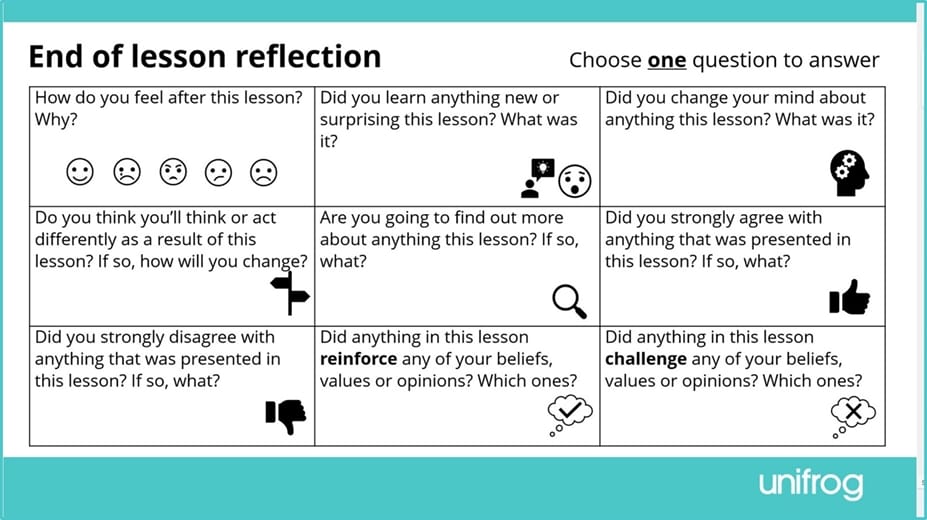
- Reflection slides: Help teachers and counselors to check understanding of key concepts, and evidence how SEL education has affected students’ attitudes and behaviors. These can be completed after each lesson, or series of lessons. You may wish to ask students to complete these reflections in a different colored pen to highlight where assessment is taking place.

What are the SEL / PSHE teacher CPD courses?
Alongside the lesson pack, you’ll have access to two CPD courses for staff:
| Leading SEL in international schools | Delivering SEL in international schools |
| Session 1: Fundamentals of SEL | Session 1: Fundamentals of SEL* |
| Session 2: Implementing an SEL curriculum | Session 2: Implementing an SEL curriculum* |
| Session 3: Safe and effective SEL in the classroom | Session 3: Safe and effective SEL in the classroom* |
| Session 4: Embedding SEL into your whole-school culture | - |
| Session 5: Assessment, evaluation, and continued improvement | - |
*Adapted versions of the sessions, to ensure relevance to staff who deliver lessons but don’t have ownership over the school’s SEL program.
Written in partnership with ISCA, the teacher courses include interactive activities that help you reflect on your current SEL program, and prepare to implement changes. For example, in the ‘leading’ course, you’ll use a provided question bank to design a feedback survey for key stakeholders to reflect on your current SEL program. 
The course also features experienced professionals sharing best practice, showing you how to embed theory into practice with easy-to-use classroom strategies. 
Upon completion, you receive a certificate of professional development, accredited by The CPD Certification Service. 
Who created the SEL and PSHE Package?
Unifrog’s in-house teaching resources team wrote the lessons. Lesson writers include a former Head of PSHE and Biology, a former Head of English, a former Head of Psychology, and a level 7 qualified careers advisor with experience of delivering careers lessons in a school setting. The same team wrote the staff SEL courses, in partnership with ISCA.
How much does it cost?
A site license for a school costs a flat annual fee of £350 ex VAT. The license includes both the Lesson Pack and the PSHE / SEL CPD courses.
As usual with Unifrog, you don't pay any extra for training and support.
Why are you selling it as an annual subscription?
An annual subscription makes sense because the Package is a ‘live’ set of resources. We will continue to develop it, to improve it, and to add new features:
- Responding to feedback from teachers and counselors delivering the lessons: Our simple feedback process makes it quick and easy for teachers and counselors to tell us how we can improve our existing lessons and courses, and to request sessions on new topics. Annual updates ensure you benefit from all of these changes and additions, year on year!
- Responding to how the Unifrog platform develops: As the platform develops, our lessons and courses will too. You can be sure the lessons will help students to make the most of the newest platform features and the courses will help staff to do the same.
Taking out an annual subscription means you’ll receive the latest improvements to our lessons and courses and you can be sure that your SEL and PSHE offer is always relevant and up-to-date.
If we subscribe, who can I share the SEL and PSHE Package with?
You can share the resources with any colleagues at your school (including ones without a Unifrog account), but you cannot share all or part of it with people outside your school, or upload all or part of it to public shared drives or forums (e.g. Facebook groups).
If my school subscribes to the SEL and PSHE Package, how do I access it?
If your school subscribes, we will make the Lesson Pack appear for all teachers and counselors on the teacher side of Unifrog in the Resources library, alongside our tried and tested existing University and Careers Counseling Year Plan.
You can access the Lesson Pack:
- As a spreadsheet (in Excel and Google Sheet versions)
- On the Resources library interface (searchable by year group / grade, and by topic)
- By searching the normal Resources library interface
We will make the PSHE / SEL CPD courses appear for all teachers and counselors on the teacher side of Unifrog in the Teacher CPD courses tool.
How can I see the SEL and PSHE package in action, and ask questions about it?
If you don’t work with us already, please request a demo here (we’ll then set up a meeting with you).
If you're already a Unifrog partner, you can download some sample resources here. And to have a demo, contact your Area Manager, or email us at help@unifrog.org.
For more information about ISCA's Student Standards, click here.
To learn more about the CASEL framework, click here.